
By Nicholas Drummond
This two-part article provides perspectives on the future of warfare. Part I considers strategic elements, including the Nature of War, which remains immutable. Part II explores tactical elements, including technological innovation and evolving doctrine, which can change radically and often. This is not a complete discussion, but tries to identify, summarise and comment on the many emerging themes resulting from the war in Ukraine.
INTRODUCTION
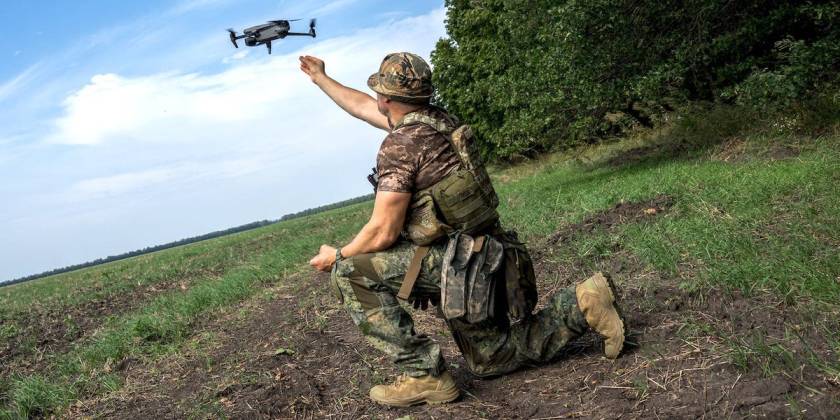
War is changing — not in slow increments, but at breakneck speed. Technology is rewriting the rules of the battlefield faster than doctrine can keep up. Drones swarm. Artillery strikes by algorithm. Infantry move beneath an invisible web of satellites and sensors. The result isn’t evolution. It’s revolution.
Yet to understand these changes, we must distinguish between the Nature and the Character of war. The Nature of war – a contest of wills between human societies, shaped by fear, friction, and the pursuit of strategic advantage – remains constant. What does change – sometimes gradually, sometimes violently – is the Character of war: the way conflicts are fought. Approaches are shaped by advances in technology, shifts in doctrine, and the context in which wars are fought.
Nowhere are these changes more visible than in Ukraine. The Russo-Ukrainian War is the first major land conflict of the 21st century, and a brutal testbed for the next generation of warfare. Old truths are being shattered. New ones are being forged in real time. The world is watching — and learning.
NATO and its allies are absorbing these lessons rapidly. But so too are Russia and China. Should we become embroiled in a future war with either, it will not be fought according to our last doctrine or assumptions. It will reflect another sharp turn in the character of warfare – one we must be ready for.
This article explores the tactical shifts that are defining this new era. From autonomous systems to precision fires, from logistics under pressure, to the battle for information advantage, it examines the trends reshaping how war is fought — and won.
Victory will not go to the side with the most tanks or aircraft. It will go to the side that adapts fastest — to the side that learns how to fight, and win, on the bleeding edge of battle.
Part One: Strategy – The Nature and Character of War
Unchanging Nature, Evolving Character
War’s essence remains immutable: it is the organised use of force for political ends, conducted amid uncertainty and human emotion. However, the character of war—how it is waged—shifts with technology, doctrine, and social norms. From the perfectly formed infantry squares of the Napoleonic wars, to the trench systems of 1914–18, and today’s drone-equipped infantry squads, each era expresses the same logic in new forms.
Clausewitz’s enduring maxim still applies: war is the continuation of politics by other means. What evolves is how political objectives are pursued in the battlespace.
Evolution Versus Revolution in Military Affairs
There is a perennial temptation to believe that one new technology will revolutionise war. Often, it fails. In the early 2000s, the U.S. military pursued a “Revolution in Military Affairs” (RMA), centred around information superiority and networked warfare, only to face costly, inconclusive ground campaigns in Iraq and Afghanistan.
Yet incremental improvements, when compounded across multiple domains, can reach a tipping point. In 1940, the German Blitzkrieg did not rely on revolutionary weapons. Tanks, radios, and dive bombers already existed. What changed was the doctrine that fused them into a fast-moving, integrated operational concept.
Today, we may be witnessing a similar inflection point. Individually modest technologies such as cheap drones, AI-enabled targeting, and ubiquitous ISR may combine into a new operational paradigm, not because any one system is revolutionary, but because together they shift the calculus of modern warfare.
The Role of Alliances and Coalitions
War is rarely waged in isolation. The power of alliances – whether formal like NATO or ad hoc like the Ramstein Group supporting Ukraine – has become an indispensable component of strategic success. Coalitions extend reach, provide strategic depth, and allow for the division of labour across capabilities, from intelligence and logistics to combat forces and industrial support. The Russo-Ukrainian War reminds us of the potency of this dynamic. While Ukraine may lack the full-spectrum military capacity of a great power, its resilience is underpinned by vast material and informational support from a coalition of Western nations.
Strategic alliances amplify military effect and act as a deterrent to aggression – but they also require careful coordination, interoperability, and aligned political will, without which they can become cumbersome or fractured. As future wars are likely to be global in impact even if regional in scope, coalition-building will remain a vital strategic imperative.
The Information Environment as a Strategic Space
Warfare today unfolds as much in the cognitive domain as in the physical. Perceptions of legitimacy, momentum, and morality are shaped by information warfare—on social media, in the press, and via covert influence campaigns. In Ukraine, both sides have weaponised narratives, using deepfakes, manipulated imagery, and curated battlefield updates to influence domestic and international opinion.
The information environment is now a strategic theatre in its own right. It shapes the flow of aid, sanctions policy, and global alignment. Future operations must integrate strategic communications, cyber defences, and psychological operations from the outset—not as adjuncts, but as primary levers of influence.
Nuclear Versus Conventional War
The Russo-Ukrainian War has demonstrated that nuclear weapons remain relevant – not as battlefield tools, but as instruments of coercion. Vladimir Putin’s veiled threats of nuclear use have constrained Western support and underscored the enduring role of nuclear arms as strategic leverage. Yet, the conflict remains conventional, suggesting that nuclear weapons deter escalation more than they determine outcomes.
This raises difficult questions about deterrence in a multipolar nuclear world, especially with emerging powers like China modernising their arsenals.
The Rise of Multi-Domain Warfare
Conflict now spans five domains: Land, Sea, Air, Cyber, and Space. Russia’s full-scale invasion of Ukraine has demonstrated this clearly, with jamming, satellite targeting, and drone strikes all operating in an integrated battlespace. The result is a growing shift towards multi-domain operations (MDO), where effects are coordinated across domains to achieve strategic objectives.
This has given rise to “systems of systems” – a network of platforms, sensors, and shooters linked by data and decision-making tools. Success in future wars will depend on integrating these systems rather than simply acquiring new capabilities.
However, the land domain is still dominates conflict. Despite the rise of cyber, space, and remote fires, control of terrain remains central. Only ground forces can secure cities, borders, and infrastructure. While cyberattacks may disrupt, and airpower may destroy, neither can hold. Ukraine’s experience shows that decisive outcomes still hinge on the physical occupation and denial of terrain.
While the conflict in Ukraine signposts future land warfare norms, how the maritime domain will evolve is far less certain. The advent of hypersonic weapons, which are best described as air-launched ballistic missiles, represents an obvious new threat to large warships such as aircraft carriers and destroyers. Unmanned Underwater Vehicles (UUVs) offer similar benefits to loyal wingman UAS, adding low cost mass to navies to increase area coverage. But none of these innovations has yet been tested in combat. Until they are, their impact is hypothetical.
In the air domain, stealth aircraft have established themselves in both air superiority and strike roles, with China developing several new aircraft that challenge U.S. dominance in this area. Hypersonic weapons require hypersonic launch vehicles. This is likely to drive the development of a new class of hypersonic strike aircraft, or to quote Professor Justin Bronk of RUSI: “Speed is the new stealth.” For the moment, such programs are darker than Vantablack coatings.
Cyber and Space domains have become highly relevant, not because they have become contested domains in their own right – although cyber attacks are very real and potentially disastrous – but because they drive competitive advantage across other domains. Space is concerned with communication satellites that support land, maritime and air operations. Cyber underlines the importance of code at every level of contemporary warfare.
The First Battle Versus the Second Battle
In war, timing is everything. Winning the first battle—rapidly deploying to prevent key territory from falling—is far less resource-intensive than retaking lost ground later. If a defending force can deny the enemy a 3:1 advantage at the outset, it avoids the far more costly task of becoming the attacker in a future counteroffensive. The initial defence of Kyiv in 2022 is a compelling example: Ukraine’s ability to deny Russia an early victory likely changed the course of the war. Retaking lost territory later would have cost vastly more in blood and treasure.
This underscores the importance of readiness, pre-positioned stocks, and early-warning systems. Winning the first battle is often easier, cheaper, and more decisive than fighting a second.
Expeditionary Warfare Versus Home Defence
Nations face a critical balance: whether to defend at home or project power abroad. The UK’s presence in the Baltics and France’s operations in the Sahel reflect an expeditionary philosophy – shaping threats before they reach home soil. Conversely, Ukraine exemplifies desperate home defence: fighting with everything at stake.
This balance informs doctrine, force structure, and defence spending. Western militaries must be able to do both—defend allies abroad while preparing to meet existential threats to the homeland.
The Deep Battle Versus the Close Battle
Contemporary warfare increasingly favours deep strike – disrupting enemy logistics, headquarters, and artillery at range. HIMARS, Storm Shadow, and loitering munitions have made deep battle the primary means of attrition. Yet the close battle remains. Urban combat in Bakhmut or Avdiivka reminds us that infantry, armour, and engineers working in concert are still needed to seize and hold ground.
The Deep Battle weakens. The Close Battle decides.
The Four Traditional Phases Still Apply
Advance, attack, withdraw, defend—these ancient rhythms still structure warfare. Ukraine’s counteroffensive cycled through all four simultaneously across its front. While technology may accelerate tempo and decision-making, it does not eliminate the need for operational design and sequential manoeuvre.
Resilience and Mobilisation in Protracted Conflict
Initial readiness and rapid response are essential in modern war, but resilience over time – measured by a nation’s ability to regenerate combat power – is ultimately decisive in protracted conflicts. This includes the mobilisation of industrial capacity, national manpower, critical infrastructure, and civilian support. In Ukraine, the war has transitioned into a grinding contest of attrition, revealing the limitations of peacetime stockpiles and highlighting the necessity of a defence industrial base capable of scaling under pressure.
Western nations have been forced to re-evaluate assumptions about post-Cold War supply chains and lean inventories. In a future high-intensity war, strategic depth will be measured not just in divisions or dollars, but in the speed at which a society can re-arm, re-train, and re-tool. Mobilisation is no longer a distant Cold War contingency, but a vital element of defence planning in an era of systemic competition.
Warfare Is Still a Human Enterprise
Even in an age of AI and robotics, wars are still fought by soldiers, endured by civilians, and decided by leadership. Ukraine’s resistance has been underwritten not only by matériel, but by national willpower.
It is nations – not merely armies – that wage war. Industrial strength, economic resilience, and national willpower are decisive. As WWII showed, military power is downstream of economic power. Part of this is very much based on morale, which is wholly dependent on belief in the cause, a commitment to action, and a willingness to sacrifice. For Ukraine, its war with Russia is an existential one, a fight for national survival. We have not fought an existential war in Europe for 80 years. The peace dividend resulting from what was believed to be the end of the Cold War has sapped both our resources and will to prepare for another. Yet we now need to prepare for an existential conlfict precisely to avoid such an eventuality.
 UK Land Power
Part two needs to be a longer term (4-5years to GAI) discussion regarding AI,which in my view will be adopted at breakneck speed by sophisticated militaries.I do not mean AI just on the battle field, where I expect hunter killer robots in all domains will roam.In the near future GAI will in all probability be unfettered by human intervention or control.Most importantly GAI will be used or even put in contol of the stategic planning of warfare from individual battles to campaign planning ,logistics and production.
The other area one needs to discuss is the rapidity with which technological battlefield development during war is ocurring,we should probably have a system in place to oil that process.It is becoming more and more apparent from Ukraine that the ability to adapt rapidly to threat and counter threat is going to become a citical decider in conflict,from cyber to the actual physics of warfare speed of inovation,adaptation and production will allow one side a better chance to prevail.
Ultimately we will reach for any tool to enable our survival in conflict.GAI has been shown to be dangerous.Our wars utilizing GAI may in fact unleash the very systems that are meant to fight for us , on us?
LikeLike