
By Nicholas Drummond
This article considers the controversial question of whether the British Army still needs a tracked infantry fighting vehicle when WARRIOR is retired in 2025 or whether BOXER can fulfil this role.
Disclaimer: The author is an advisor to KNDS Germany which makes both Boxer and Tracked Boxer; however, the views expressed are his own opinions, not those of the Company he works with.
Under previous plans, the British Army intended to field four armoured infantry battalions in WARRIOR and four mechanised infantry battalions in BOXER. Four further light mechanised infantry battalions would have had a mix of FOXHOUND and MASTIFF mine-protected, ambush-resistant (MRAP) vehicles. This would have provided a total of 12 out of 31 infantry battalions with protected mobility. Under current plans, the four WARRIOR armoured infantry battalions will convert to BOXER and become mechanised infantry battalions.
The WARRIOR upgrade programme was cancelled in 2021 on grounds of cost.1 It had been budgeted at around £750 million for 380 vehicles, but after a delayed development process, the cost rose to £1.5 billion. Any army has to live within its means, otherwise meaningful regeneration quickly becomes unaffordable. So the rationale for cancellation is easy to understand.
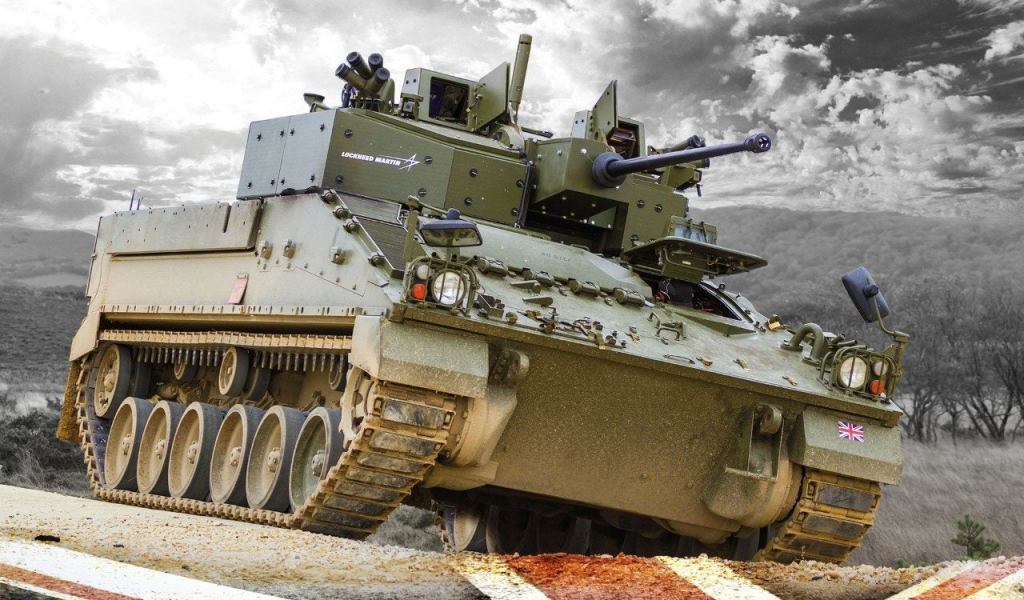
The problem created by this decision is that the army has now reduced the number of infantry battalions with protected vehicles by a third. Ukraine has amply demonstrated that threat posed by artillery and armed drones makes protected mobility a universal requirement across all land force types.
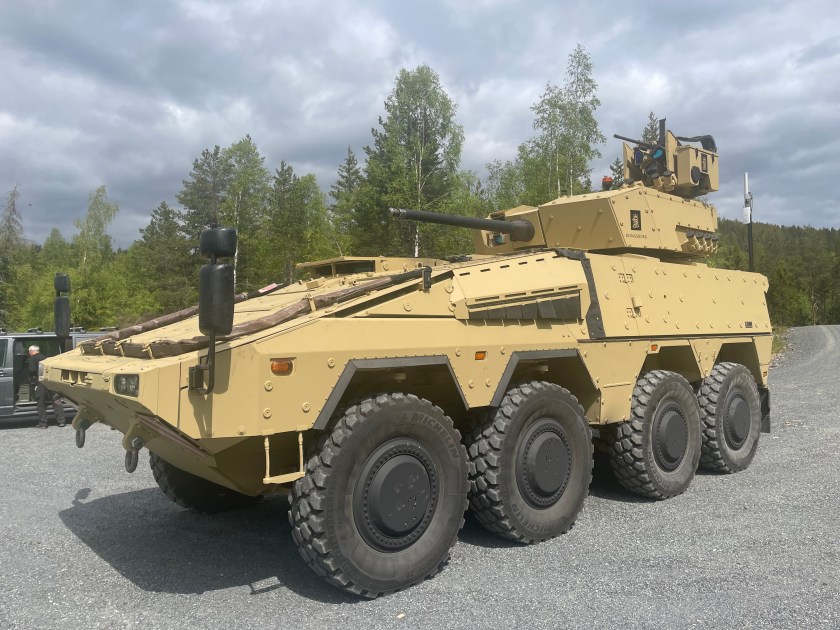
BOXER will be a superb mechanised infantry vehicle. Analogous to the US Army’s Stryker, it is designed to give the British Army a true expeditionary capability while offering utility across conventional and asymmetric warfare scenarios. Battalions that have them will literally be able to get in, drive 1,000 kilometres and be ready for operations when they arrive at their destination. BOXER’s unique combination of operational and tactical mobility will have a transformational impact, making it ideal to fight the FIRST BATTLE. This is the concept of deploying pre-emptively to prevent territory from falling into the hands of an aggressor. BOXER is also well suited to fighting the DEEP BATTLE, where infantry battalions act as a screening force. This enables artillery to be used to degrade enemy forces at stand-off distances. Sophisticated sensors linked to precision guided munitions and 155 mm artillery have become pivotal in establishing efficient kill chains. Forward located BOXER battalions will find and control fires. They will also use anti-tank missiles to destroy enemy armour as it approaches. Their most important function is to deliver infantry mass that physically holds ground. This approach reflects the “new way of winning” described by the Army’s new Land Operating Concept.2
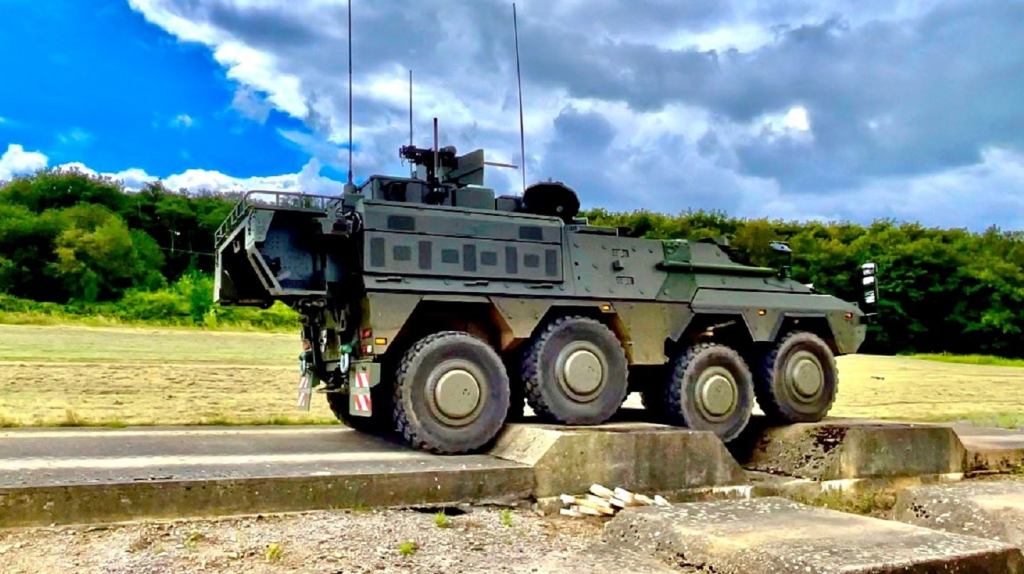
However, when it comes to fighting the SECOND BATTLE and the CLOSE BATTLE, BOXER is less than ideal. Mobility is not the issue here. In some situations, like winter mud or deep snow, tracked vehicles will be preferable, but BOXER’s cross-country performance is a step-change versus previous generations of wheeled combat vehicles. The issue is protection. When you conduct a deliberate assault against an enemy position, you need to maximise survivability. An infantry fighting vehicle (IFV) needs to be able to absorb punishment in the same way as a main battle tank (MBT).
NATO armies have added appliqué armour to tracked IFVs so that they offer increased protection for their crews. When WARRIOR was used in Afghanistan, the “Theatre Entry Standard” added significant extra armour increasing weight from around 25-28 tonnes to well over 40 tonnes. BOXER weighs-in at around 32 tonnes with permissible weight growth to 40 tonnes. Once you exceed this limit, its off-road mobility is compromised. Besides this, the whole point of an 8×8 platform is to provide a rapid and agile combat vehicle able to travel vast distances at high speed. So when you add acres of extra armour, you defeat its core purpose.

Current thinking among NATO members suggests that there is a need to have two separate platforms for expeditionary and manoeuvre warfare tasks. This has lead to a new duality:
- Medium forces built around 8×8 mechanised infantry vehicles
- Heavy forces configured around main battle tanks and tracked infantry fighting vehicles.
Wheeled vehicles excel at pre-emptive expeditionary deployments, which means they get where needed quickly and then hold ground to fight the FIRST BATTLE and DEEP BATTLE. Conversely, tracked infantry fighting vehicles deploy less quickly but are more resilient, making them ideal for combined arms manoeuvre, operating in partnership with MBTs, artillery and combat aircraft to fight the SECOND BATTLE and CLOSE BATTLE.
The United States anticipates re-equipping Army divisions around Armored Brigade Combat Teams (ABCTs) equipped with a mix of M1A2D Abrams MBT and the forthcoming XM30 Optionally Manned Fighting Vehicle (OMFV). The latter will replace the M2 Bradley IFV and will offer much higher levels of protection. This will complement existing Stryker Brigade Combat Teams equipped with the Stryker ICV. In Europe, France and Germany are jointly developing the Main Combat Ground System (MGCS). This is a family of vehicles that will include a main battle tank, an infantry fighting vehicle, and a manoeuvre support vehicle, all built around a common platform. This will provide a solution similar to Israel’s Merkava MBT and Namer IFV, which are both based on the same heavy platform. Future IFVs are expected to weigh in the region of 50 tonnes. This is well above the weight limit of any wheeled 8×8.
If the UK decided to adopt a new IFV to replace Warrior it has four potential choices:
- XM30 OMFV – GDLS Griffin / Katalyst based on the Ajax platform
- XM30 OMFV – Rheinmetall Lynx KF41
- Franco-German MGCS IFV
- Tracked Boxer
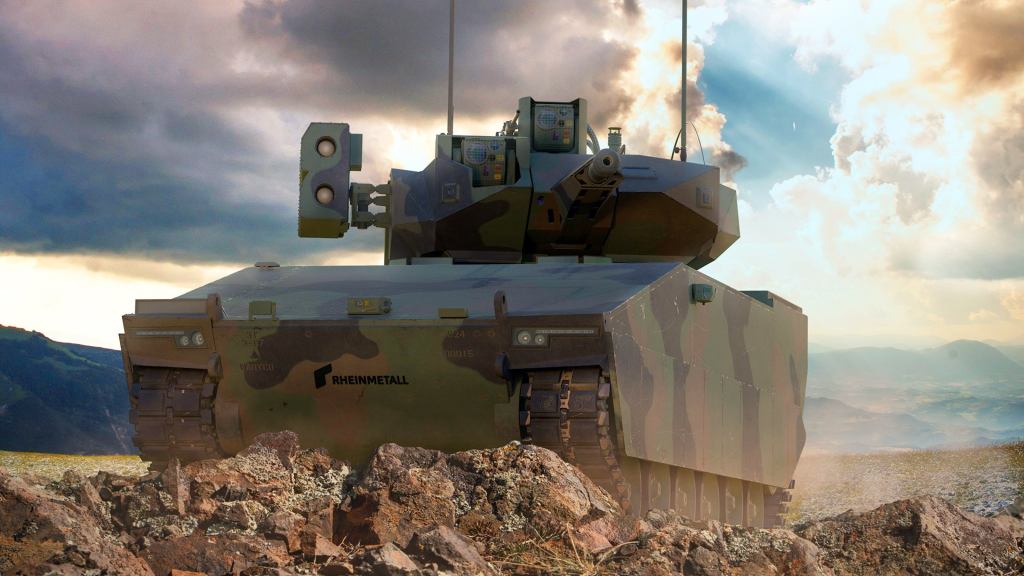
All of the vehicles listed above are still in development. The US Army will select its OMFV winning candidate by 2027. It could be a smart move to wait until this programme delivers, or even to join it as a partner. Either GDLS Griffin / Katalyst or Rheinmetall KF41 would be suitable for the UK’s needs. GDLS’s vehicle has synergy with Ajax and could be made at its UK facility in Merthyr. If Rheinmetall wins, its Lynx KF41 could be made by RBSL in Telford. The Franco-German MGCS IFV would give the UK a common platform for both MBT and IFV, which would be efficient, less costly and easier to operate. Tracked BOXER made by KNDS provides commonality with the Boxer fleet already being acquired. It has an increased GVW to 50+ tonnes, allowing a significant extra amount of armour to be fitted while using the same turreted mission module as wheeled BOXER.
If we separate the infantry fighting vehicle and infantry carrier vehicle (8×8) functions, does BOXER still need a turreted cannon?
The answer has to be “yes.”
The point of any cannon-equipped vehicle is to provide a mix of weapons that offer a layered response to different threats. A coaxial 7.62 mm machine gun will deal with enemy infantry in the open. A 12.7 mm heavy machine gun will neutralise light vehicles and aerial threats. A 30 mm or 40 mm cannon will defeat other IFVs or 8x8s and suppress dug-in troops. A Javelin ATGM missile will destroy enemy MBTs. It is not a good use of expensive anti-tank missiles to engage IFVs. So having a mix of weapons allows the right tool to be used for the right job.
So far, UK BOXER will only have a 12.7 mm heavy machine gun mounted on a Kongsberg RS4 weapon station. This is good for self defence, but less than ideal for any kind of offensive operations. A variety of potential turret options has been demonstrated on BOXER and all appear viable. These include the Rafael Samson 30, which is in service with Lithuania, and KNDS’s RCT30, which has been selected by the Bundeswehr. The Nexter T40 and Kongsberg’s RT60 have also been shown in prototype or LRIP form. To be clear, using BOXER for offensive operations when it is only equipped with a 12.7 mm heavy machine gun is a no-no.
One school of thought is that as soon as you add a larger weapon to Boxer, it will look like an IFV so will be used as an IFV. Well, the US Army Stryker also has a turret. So the question is how do you use a cannon-equipped Stryker tactically?
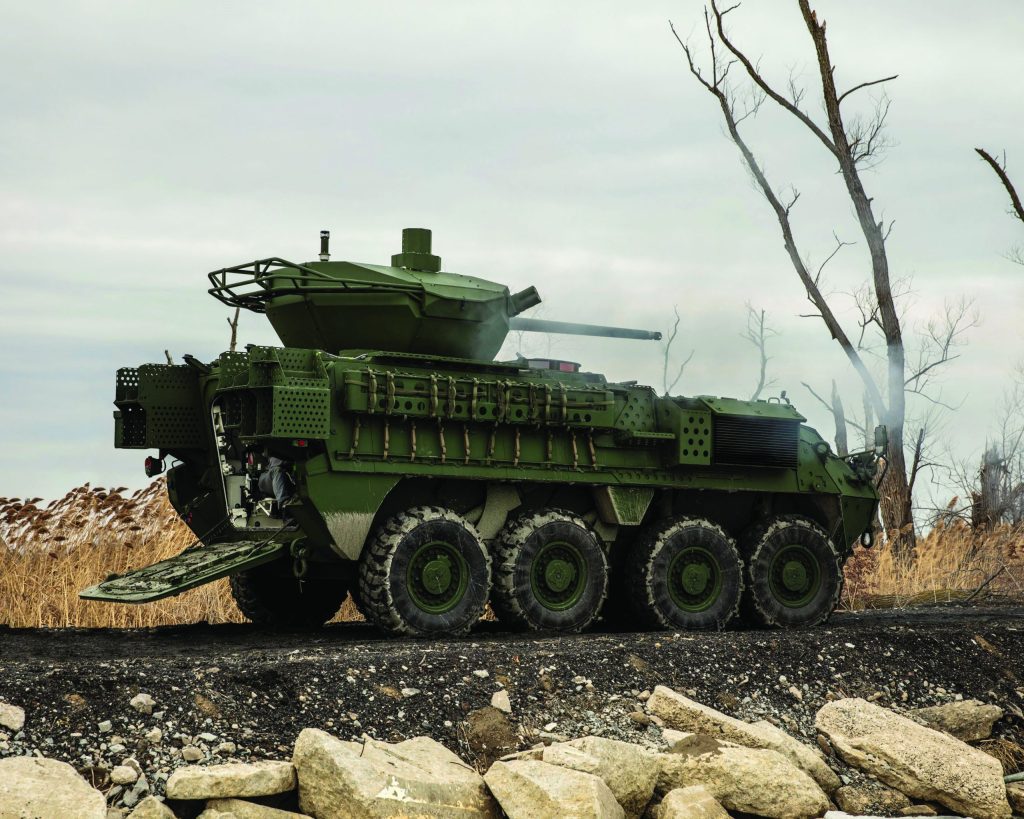
In defence, 8×8 vehicles will be sited in such a way as to maximises infantry survivability. This can be achieved by placing them near a main defensive line to provide direct fire support for dug-in troops. In urban areas, the vehicle might be hidden from view, or be positioned to cover key approaches, firing up a street or protecting a junction. It will also be placed where it can provide a withdrawal route in case troops on the ground are overwhelmed. In all defensive situations, 8×8 platforms will be ready to support the fight or to aid a withdrawal to the next defensive line.
In the attack, 8×8 vehicles will be used to deliver infantry mass where needed. The key question is where should troops dismount?3 In a situation where an enemy is equipped with large numbers ATGMs, de-busing just in front of an enemy forward will be risky – unless the vehicle has an active protection system (APS).4 Initially, Stryker doctrine envisaged units de-busing one tactical bound or geographical feature from the objective. Training and experience suggests that Stryker units can advance so quickly, achieving a shock effect, that infantry can de-bus on the objective. So the answer to the question will depend on the situation. It will require the commander on the ground to make the right call. APS will enable 8×8 vehicles to be used in a way that’s very similar to a tracked IFV. This belief has shaped French doctrine. L’Armée De Terre no longer has a tracked IFV, merely the VBCI with a 25 mm turret. This was used like a tracked IFV in Mali and proved to be extremely effective.
For a deliberate set-piece assault against a well-prepared defensive position, which may include a minefield that needs to be breached, a heavier protected tracked IFV will always be preferable to a lighter 8×8, regardless of the weapon mounted on it. Whatever the UK decided to do, if we decide that a turreted BOXER offers more utility than a tracked WARRIOR replacement, then we ought to resource the missing four battalions that were meant to get an upgraded WARRIOR.
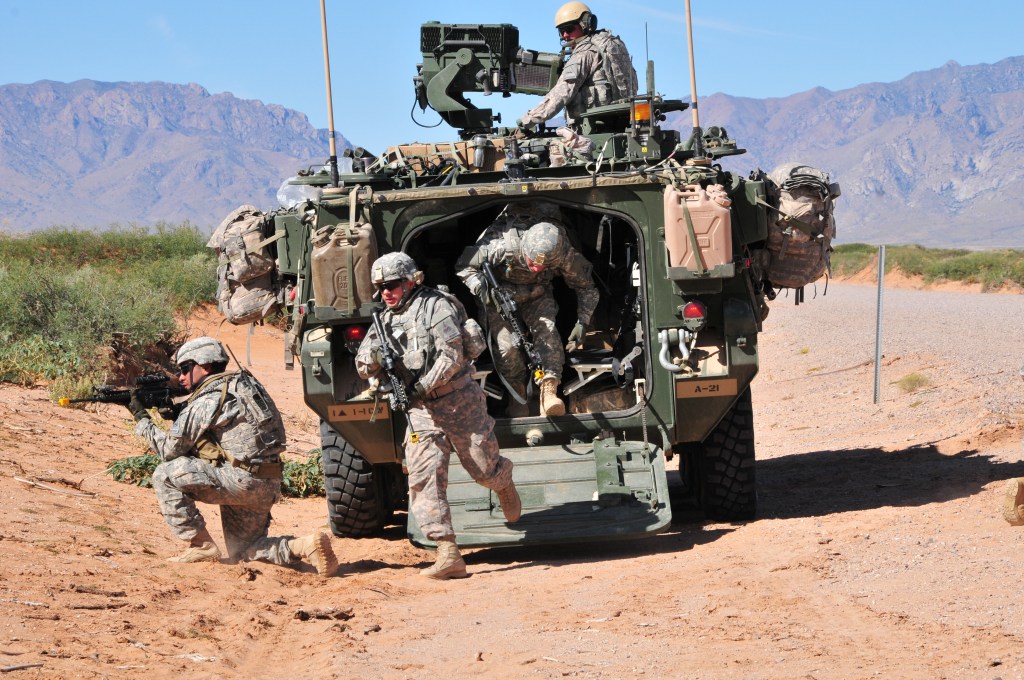
Ultimately, this discussion is not about wheels being preferable to tracks. It is about the need for both. Although the British Army needs to adopt a much greater expeditionary focus, something that BOXER will facilitate, it needs the duality of medium (wheeled) forces that can deploy with speed although they are less resilient, PLUS heavy (tracked) forces that are more resilient, but deploy less quickly. This approach is necessary so that the Army is usable across the widest possible range of scenarios, but also to enable us to operate with our NATO allies and partners, who are all heavily invested in medium and heavy forces.
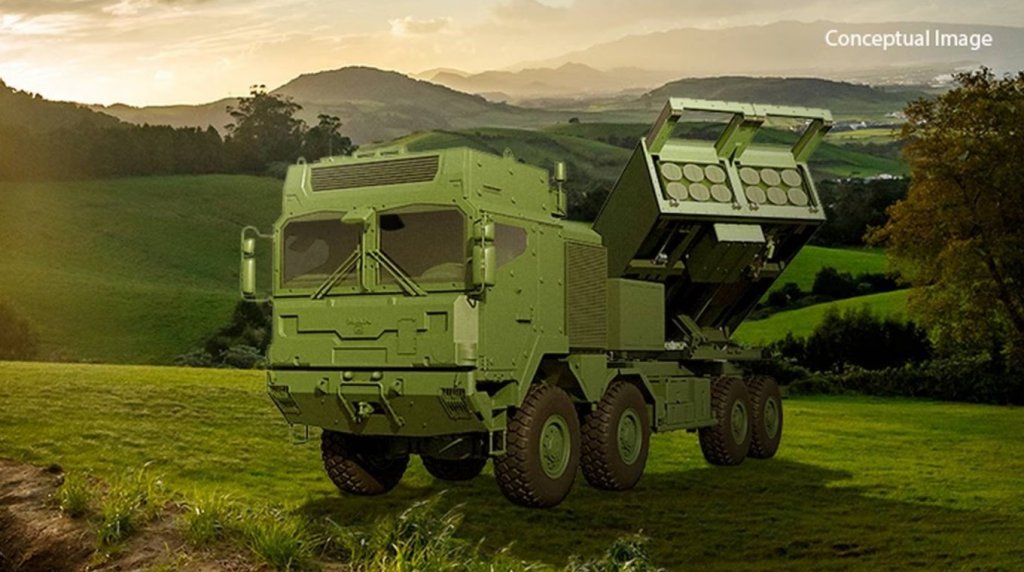
The unifying capability across FIRST BATTLE and SECOND BATTLE doctrine is artillery systems. As noted above, these will support both medium and heavy forces at stand-off distances. Our GMLRS regiments are gaining new rocket and precision guided missiles (PrSM) for their M270A2 launchers, increasing effective range from 70 km to 150 km for rockets, and to 499 km for PrSM. Furthermore, 52-calibre howitzers have set a new tube artillery standard with ranges increased from 20-30 km to 40-50 km. With artillery located further back, to increase counter-battery location times, and thus survivability, it is less dependent on tracked platforms to ensure mobility. This is why systems like Caesar, Boxer RCH155, Atmos, and Archer are gaining in popularity over traditional tracked self-propelled guns.
Any requirement for heavy armour comes with a supplementary need for heavy equipment transporters to ensure the operational mobility of the units equipped with them. All tracked vehicles create logistical support and transportation challenges. For this reason, heavy tracked platforms have increasingly become niche capabilities. Therefore, we are seeing armies focus their resources around building a larger medium element, supported by heavy and light forces.
A quick observation about light mechanised forces is that these generally reflect the reality that not every unit type needs an 8×8 platform. Some capabilities can be well served by lighter, less expensive 4×4 MRAPs. Vehicles like FOXHOUND, JLTV, HAWKEI, AMPV, MILOS M16, EAGLE, and LINCE, are well suited to command, liaison, and light patrol roles. We also need smaller, less expensive personnel carriers, such as BUSHMASTER, COUGAR, PATRIA 6X6, GRIFFON, and DINGO. As a rule of thumb, in terms of weight classes, 50% of an Amy’s vehicles should ideally be medium wheeled (8×8), 25% ought to be heavy tracked, and 25% should be light wheeled (4×4) to ensure utility across most anticipated deployment types.
To summarise, BOXER equipped with a turreted cannon and an active protection system able to counter anti-tank missiles, is capable of performing an IFV role. However, it lacks the passive armour protection needed to ensure the same level of survivability as a main battle tank. If you add extra protection to an 8×8 platform, you undermine its core purpose, which is to be an agile and highly deployable capability. Therefore, a dedicated tracked IFV is desirable as this can be heavier, more resilient and more survivable in an assault. Tracked vehicles are better able to negotiate the most challenging off-road environments, even though the difference between them and wheeled vehicle is less than it was.
NOTES:
- See UK Parliament report
https://hansard.parliament.uk/Lords/2023-05-03/debates/438852AB-7ED0-4A43-BD76-272088C64809/WarriorCapabilitySustainmentProgramme ↩︎ - See British Army Review – Autumn 2023 – A New Way of Winning
https://chacr.org.uk/2023/08/31/the-british-army-review-185/ ↩︎ - See US Army publication: The Stryker Brigade Combat Team, The Infantry Rifle Company https://armypubs.army.mil/epubs/DR_pubs/DR_a/ARN31150-ATP_3-21.11-000-WEB-1.pdf
↩︎ - Any vehicle equipped with APS can dangerous to its own or nearby troops, especially if they dismount close to it when an incoming anti-tank missile is neutralised. So the APS will need to be disabled across an assaulting formation before troops de-bus. For 8×8 vehicles that are not equipped with APS, troops may need to de-bus a tactical bound behind the objective and move forward on foot with the vehicle providing direct fire support. ↩︎
 UK Land Power
Couple of points Nicholas
I believe every infantry vehicle is an IFV, some are better protected than others but all need the ability to lay suppressing fires.
I agree with your mix of heavy, mid, light overall
If we are going heavy then the namer/Merkava seem hard to beat for VFM and proven ability. Likewise skip the KF41 and have a common platform around the KF51
One thing you didn’t cover is tracked boxer which has room for additional armour. The force could drive on the wheeled modules to pick up their tracked driver modules with extra armour built in. Saves on transporters.
What is shocking is decisions being made due to cost rather than need
LikeLike
A really interesting article Nicholas, thank you. I believe that the French army uses an 8×8 as their IFV. Do you have any information or views on how they are using it?
LikeLike
Great article, making many good points.
Can the Boxer 8 x 8 be equipped and used as an IFV – of course it can. The question is do you want it to be used that way?
1. Is the concept of the IFV as currently realized by everything from Bradley to OMFV, from Marder to Puma, from Warrior to ASCOD fit for purpose on the modern battlefield ? Do we want to put all our eggs (dismounted infantry, ATGMS, Medium cannon, sensors, comms, blah blah) into one single, large, heavy vehicle which can never be as well protected as the MBT it accompanies?
2. Related to above, and your excellent question – In any vehicle designed to carry the infantry section into battle, where does your doctrine / conops state they will dismount? If you expect the vehicle to roll right up onto the enemy position the iron triangle in the form of Space Weight and Power (SWaP) considerations is going to lean towards active and passive protection, leaving less SWaP for 50mm cannons and ATGM’s ?
3. Where does the British Army expect to fight, and is a 1000km road march actually going to make it to the “first battle” ? NATO wants to increase the Enhanced Forward Presence Battle Groups in the Baltics and Poland to Brigade size. With 148 Challenger 3, and 580 Ajax (FRES) family vehicles, we have plenty of kit for 2 Armoured BCT’s rotating BG’s through Estonia, but would they need a MIV equipped Mechanised Infantry BG to make up the mass? The ‘first battle’ if Russia decides to lop off the top 25km of Estonia to test western politicians actual commitment to Article 5, is going to be fought by the NATO eFP BG “garrison” troops, unless there is a considerable period of tension and warning for a Boxer based formation to cross the channel and drive to Estonia. By the way this does not mean that a Boxer formation cannot make it to Poland or Romania to take part in the “second battle” or to be used across sub-saharan Africa to take on Wagner backed insurgents etc.
4. The Deep Battle – I am not sure of your definition of deep here, but also not sure that Boxer based formations calling on 155 from 40km away constitutes deep any more. Drone (or F35) directed GMLRS-ER at 150km is possibly Divisional Deep – while the Precision Strike Missile might be Corps/Theatre deep now? But more to the point here, will there be Boxer based Brimstone launchers, Boxer based C-UAS/SHORAD and Boxer based 120mm mortars to fight the close battle, as it overlaps into “BG deep” ?
So until we see (?) the British Armies newly developed doctrine for the use of Boxer MIV and any IFV that replaces Warrior, and the work that went into developing the doctrine and reasoning behind it, this is my two pennies worth:
For an Army whose heaviest forces would be focused on NATO tasking in Estontia, Tracked Boxer is the way to go, or at a push an ASCOD 42 based HAPC.
I agree on your assertion ref protection (Namer), using SWaP for maximum passive and active protection would be key, and differentiate a tracked HAPC from the Boxer MIV 8×8. If we got rid of the ridiculous notion of the DRS BCT, and brought all Ajax variants, including the 245 CTA gun equipped versions into 2 Armoured BCT’s, then there would be plenty of “Cavalry Fighting Vehicles” with the medium caliber gun, perhaps spiral development would add ATGM, but whether its defeating the enemy recce screen, suppressing enemy IFV or dug in infantry, we have a lot of 40mm sized potential alongside our expected paltry number of enhanced MBT’s. What we lack is a tracked HAPC to deliver the “Panzer Grenadier” type infantry to work with them in the all arms battle group. An ASCOD derivative would make sense (not GDLS OMFV which we have repeatedly been told is NOT based on ASCOD), for logistical commonality with Ajax, but Tracked Boxer has the edge in GVW (and hence protection) and commonality of mission modules with the wheeled Boxer fleet. In the end of course it would boil down to money.
If doctrine is to role up on the enemy position while the 40mm CTA Ajax provide cover and suppress, then maybe a RS4 or RS6 with an MG and 40mm GMG is good enough. If you want to stand off and support from a distance as the infantry use dead ground or other cover to approach, then a GMG or M230LF 30x113mm cannon that can lay down ballistic IDF correct by section level drone (DT40?) would seem suitable, especially if backed up not by a Javelin but by a pair of LMM (8km) or Raytheon 84mm GMM (2km), if you want more rounds, and more missiles swap out the RWS for a Moog RWiP; but whatever you mount, it needs to be able to contribute to the C-UAS fight.
LikeLike
Nick, thank you for another good article. I agree with your premise of needing a balanced (heavy, medium and light) force. I do question your assertion that the British Army has 3 choices in tracked AFV. CV90 is a great family, with a large user base and developed over the years to keep pace. There is also the Hanwha Redback, which seems to be a very credible AFV and we could potentially agree with Hanwha to be their industry partner for supply customers in European and the Middle East.
LikeLike
Both CV90 and AS21 Redback could be alternative future IFV solutions. However, while the relative performance of different vehicles is important, so is the industrial solution that manufactures and support them. This is why the GDLS, Rheinmetall, and KNDS offerings are especially relevant.
LikeLike
Do you think that BAE would be unable to take advantage of its large manufacturing footprint in the UK, to prepare local production of CV90s?
LikeLike
The issue is that many CV90 parts are not made in the UK, and depend on a Nordic supply chain. SCANIA engines, for example, are made in Sweden, France and the Netherlands, but not in the UK. In order to add UK content, you would need to redesign many components and qualify the UK supply chain. This would add time and cost. If we wanted CV90 fast and cheap then we would need to buy it off the shelf. At this point, I think we need to reshore our capacity to design, engineer, build, and support armoured vehicles domestically.
LikeLike
Jim Storr has a devastating critique of IFVs in Chapter 6 of his recent book Battlegroup!
Some quotes from page 124:
“The overarching conclusions was that IFVs are a bad idea. They would get infantrymen killed for little or no gain.”
“Tens of thousands of officers have commanded IFVs on operations. Not one of them has had to attack a moderately well-defended position in general war. It is most unlikely that any of them has conducted fifty, let alone a hundred, assaults with APCs or IFVs. Not one of them has had a third or a half of his IFVs knocked out short of the objective, and then had to write letters of condolence to the next of kin.”
On page 127, he does list “two ways forward” using “stealthy tactics” and “platoon-level assaults” instead of “company-level assaults”.
1. Many smaller APCs, the size of the Spartan
2. Israeli-style heavy HPCs, which you seem to be leaning towards by considering vehicles weighing more than 50 tons
LikeLike
Concur with your observations, Fred.
Could never understand the logic of having a vehicle intended to operate in the same high-intensity battlespace as a MBT, with at least double the personnel inside it, yet with half to 2/3rd’s the armour protection, and not expect to suffer an inordinate amount of casualties.
One sees the gradual increases in armour and displacement of IFV design nearly matching a modern MBT’s weight (itself grown to the point that 70+tons is now considered operationally acceptable), and with the advances in RWT technology (PUMA, ARMATA), it is entirely plausible that in the near future the MBT and IFV will amalgamate into a single platform…the Infantry Battle Tank (IBT)?
If this does eventuate, should be fascinating to see the inter-corps squabbles (between Infantry and Armour) as to who has right of ownership, and primacy of relative doctrines…
LikeLike
Fred
Jim’s book is excellent, for those who have never read it, or dont know the context, Jim was a British Army infantry officer for 25 years, as was his brother and they spent over a decade running hi-fidelity war games. I think Nick in the main article captures the overall essence of Jim’s arguments when he asks where and at what point do the infantry dismount? I tried to follow that up with my points about prioritizing SWaP for protection over fire power. Personally I would like to split the “traditional” IFV back into HAPC and a separate Cavalry Fighting Vehicle.
LikeLiked by 1 person
I don’t follow Jim Storr’s point. Just because there is little world experience of operating IFVs against moderately well defended positions (with tanks in intimate suport), does not mean they will probably fail en masse and be mostly wiped out. It just means that we have not got combat data.
What is he suggesting as an alternative to the IFV – using small APCs (less well armoured, no cannon, small number of dismounts) OR going to heavy Namer-style APCs (more survivable, but expensive, no cannon).
LikeLiked by 2 people
Sorry for the lack of clarity. Much of Storr’s analysis comes from wargaming against his late brother, also a British Army officer, over maybe two decades. His late brother earlier wrote up some results in British Army Review, studying “over 90 battes and engagements in which mechanised infantry had attempted to attack defended positions.” There is some collaborating evidence from other sources in Chapter 6 of the living Storr’s book.
He suggests both large and heavy IFVs as alternatives. The goal is to avoid having the infantry wiped out before dismounting.
LikeLike
Thanks Fred. Armoured Infantry in Warriors in the assault are not unsupported of course. The target might have been hit first by a GMLRS strike. AS90s would have rained 155mm arty fire down before and during the assault, being lifted at the last minute. The Inf Bn’s own 6 x 81mm mortars will have been in action and possibly the Battalion’s anti-tank platoon with its Javelin ATGM firing at enemy AFVs and strong points.
The Warriors will be firing their 30mm cannons throughout the assault….and of course Challenger 2 tanks will be in intimate support right alongside the Warriors and firing their 120mm cannons at any armoured vehicles or strong points. The assault may also have been supported by RAF Fighter Ground Attack or Apache AH64s.
I hope the Storr brothers modelled all that!
LikeLiked by 1 person
Whether they did or did not, it doesn’t mean that the institutional British Army and other armies are making decisions based on better information than the Storr brothers created.
LikeLike
Forgive me, I’m a newb trying to get to grips with this.
I don’t understand why people are talking about IFVs attacking enemy strong points without support. Isn’t the idea that high manoeuverability vehicles can move fast and attack alone where the strong points aren’t, as well as delivering infantry as part of combined armour where those strong points are?
Fred quotes, “Tens of thousands of officers have commanded IFVs on operations. Not one of them has had to attack a moderately well-defended position in general war.” I’m thinking, exactly. Why would they?
LikeLike
Yet another excellent article, Nick, presented in the incisive, lucid fashion which is your trademark. Sorry to join any remaining discussion so late but I have been involved in other business. However, I have one two queries.
In a recent, intriguing short extract, you mentioned some speeches by the Chief of the General Staff revealing that that the British Army will be reconfigured around two deployable divisions and say that you applaud the decision. You add that 3rd (UK) division will have two armoured brigades plus a deep strike reconnaissance brigade, as before, but that it now seems that 1st (UK) division will have two light mechanised brigades plus 16 Air Assault Brigade. You comment that this is definitely a step in the right direction and will give the UK credible first and second echelon forces.
I do wonder about the role of 16 Air Assault Brigade n the UK (1st) Division. They are often used as shock troops, first on the scene in rapid deployments to quell trouble in world crisis spots. However, they do have another potential role. They sometimes deploy by Chinook helicopters in tasks akin to those of the old 24 Airmobile Brigade, sadly no longer with us. Could they not be used so again? I mean in the quick deployment or re-enforcement role, ferrying troops rapidly from one location to another, even within the constrictions of now being “divisional” troops”. It would be nice and extremely useful to have such a flexible force to hand.
Another point is that I see very little mention in current discussion of future British Army fighting vehicles of the “0verwatch” versions of either Ajax or Boxer, although I did see a photograph of a Boxer-based vehicle carrying Brimstone missiles. Should not such powerful anti-armour vehicles be well to the fore in the current development of our future inventory?
LikeLike
This is the army report of the CGS speech at DSEI23.
https://www.army.mod.uk/news-and-events/news/2023/09/army-chief-sets-out-plan-for-next-generation-of-war-fighters/
*General Sanders detailed some of the key upcoming changes … such as:
1st(UK) Division taking 16 Air Assault Brigade Combat Team under its command”
Remember that 16 Brigade, in addition to 2 parachute battalions, has a Gurkha battalion in the air assault role. The helicopter procedures of the Gurkhas should be usable by the paras to give the flexible force that you suggest.
LikeLike
Thanks, Paul, for reminding me about the Gurkha component of 16 Air Assault Brigade. I had almost forgotten about it,
Unfortunately no one has yet replied to my point about the need for “Overwatch” vehicles. Has a fully developed “Overwatch” vehicle been developed yet on either Ajax or Boxer?
LikeLike
With ATGM like Spike ER possessing a range of 10 km, and fitting in standard turret missile pods, you could argue that a separate overwatch vehicle with long-range ATGM is no longer needed. For sure the maximum visual range for a standard ATGM cannot be longer than 8-10 km even in the flattest of regions. But what really changes the game is newer generations of NLOS missiles like Brimstone and low cost loitering munitions like Switchblade. These don’t need to be mounted on frontline combat vehicles anymore. Instead they can be mounted on lighter armoured vehicles and fired at stand-off distances. In Ukraine we are seeing new methods of engagement and can expect these to define revised doctrine. I would summarise this as a new delineation between line-of-sight and non-line-of-sight weapons.
LikeLike
What it is to be closely acquainted with the latest military thinking and doctrine. I feel a right ignoramus! Seriously, though, thanks very much, Nick, for replying to my rather naive thoughts on “Overwatch” vehicles..
I felt sure, though, that I had seen a photo of at least the Boxer fitted with Brimstone missiles and have just found it! It is on the back page of a publication called “Pro Patria” – Journal of Defence UK” and it carries the caption which reads “Filling the capability gap to defeat mass armour – the surface launched Brimstone on Boxer solution capitalises on Brimstone’s “one missile, multi-platform” versatility to provide the tactical commander with the capability to deliver precision anti-armour effects at long ranges, with no modification to the Boxer drive module.” It s an advert for the vehicle by the prestigious MBDA firm, so that it would seem that some people at least think that such an armoured vehicle is necessary for that kind of NLOS weapon.
I think that loitering munitions might be somewhat of a different kettle of fish, though. They could possibly be carried on a lighter vehicle (e.g. JLTV) for the FIRST BATTLE, as you term it, but would need something stronger when mixing with the big boys of heavy armour.
As an interesting sidelight on such weapons, I can recall a real humdinger of n exchange between contributors to a website some years ago . I was pro loitering munitions and at one point seemed the only one supporting such weapons. Amongst the opposition was that brilliant doyen of defence commentators, Think Defence, who thought up all sorts of ideas to show that they were not really suitable for service. Anyway, they have come in and are proving successful in several theatres.
Anyway, just to let you know that research and development into quite heavily armoured “Overwatch” vehicles is taking place, although, as you say, the doctrine might change. Kind regards.
LikeLike
Fred, Do you have more details on the reference below please? The date or edition?
– His late brother earlier wrote up some results in British Army Review, studying “over 90 battles and engagements in which mechanised infantry had attempted to attack defended positions.”
LikeLike
The British Army Review issue number is given as 118, pages 52-58. Jim Storr’s late brother used the pseudonym Hugin. The brother’s real name was John Storr. I don’t know offhand how to access archives of the Review.
LikeLike
Fred, Do you have more details on the reference below please? The date or edition?
– His late brother earlier wrote up some results in British Army Review, studying “over 90 battles and engagements in which mechanised infantry had attempted to attack defended positions.”
LikeLike
Interesting to picture infantry dismounting and deploying from an IFV with its active protection system in operation.
LikeLike
the Korean Redback developed for Australia has already beaten the lynx in the Australian heavy IFV completion after a few years of trails and testing am sure as AUKUS partners the the data for the decision could be shared especially if the thunder wins the 155mm contract if could be a good option. (although noted lynx beat it in the US OMFV program) The reasons haven’t been publicly released.
LikeLike