
By Nicholas Drummond
Introduction
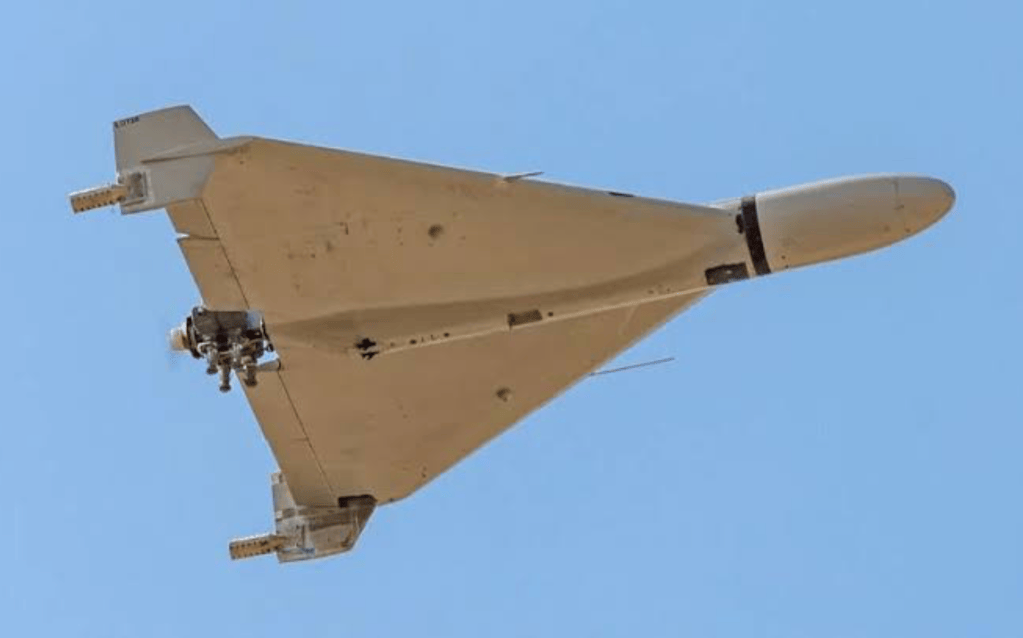
Over the past decade, warfare has changed beyond recognition. We should be in no doubt that what we have witnessed is revolution, not evolution. Low-cost drones and cruise missiles able to fly autonomously, in swarms, and to attack targets over thousands of kilometres have created an aerial threat that could easily overwhelm Britain’s existing air defences.
The proliferation of drones is not the only concern. Tactical ballistic missiles have become more affordable, more precise and more lethal. Hypersonic missile technology represents a further threat. Travelling at more than Mach 5, hypersonics give early warning systems less time to react and are extremely difficult to engage – although Ukraine’s Patriot batteries have shown that interception is not impossible.
The war in Ukraine has provided a terrifying glimpse into the future. In June 2025, drones launched from lorries driven covertly deep into Russia struck strategic bomber bases and destroyed or damaged a significant number of expensive aircraft on the ground. It was an episode that exposed Britain’s own vulnerability. It is often said that drones and low-cost missiles have democratised air power. What this actually means is that adversaries no longer need large fleets of combat aircraft or deep pockets to inflict considerable damage. The $1,000 drone has become a strategic weapon.
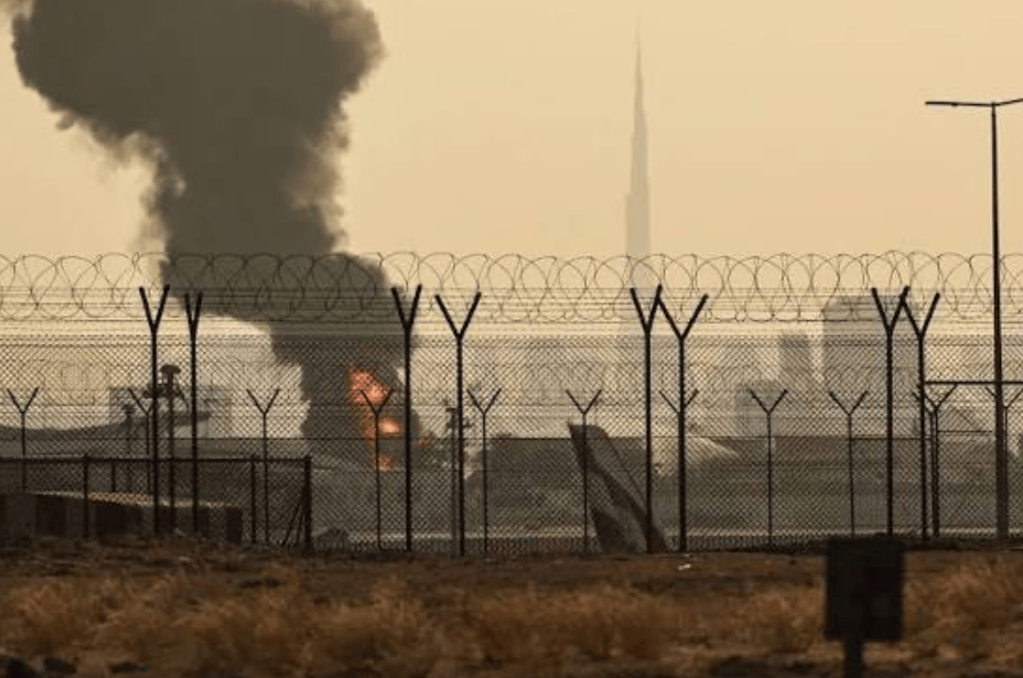
Even before we add the risk of nuclear attack to the equation, it is clear that Britain urgently needs a more extensive network of integrated and layered air defences. A ballistic missile shield is worth pursuing, but not before the drone threat is addressed.
The nuclear picture is nonetheless darkening. SIPRI estimates that Russia held about 5,420 warheads in January 2026, with around 1,800 deployed – its highest figure since 2017. China’s arsenal, at about 620 warheads, is growing faster than any other, and North Korea has around 60, with fissile material for at least 90. Iran has no weapon, but its programme has been set back rather than eliminated: a substantial stock of 60%-enriched uranium is believed to have survived this year’s strikes. With New START expired in February 2026, there are no longer verifiable limits on US and Russian strategic forces. AI in the wrong hands is likely to help rogue states develop weapons of mass destruction, and we should expect proliferation.
Would Putin use these weapons, and would Britain be singled out? Russia’s 2024 doctrine lowered the threshold for nuclear use and treats aggression by any member of a coalition as aggression by the whole coalition. Moscow has repeatedly named Britain in its threats, most recently when Medvedev warned in February 2026 that “supplier countries” could be targeted. So far, these threats have been coercive signalling: Putin has not used nuclear weapons despite several of his declared red lines being crossed. The greater danger is escalation in a NATO–Russia crisis, in which Britain (Ukraine’s most vocal European backer, host to US bombers, and a nuclear power in its own right) would be a prime candidate for a limited strike. That is precisely the kind of attack a selective missile defence is designed to defeat.
Unfortunately, the cost of ballistic missile defence is stratospheric. Affordability means we will need to be discriminating in choosing what we protect. The purpose should be to preserve vital national functions and defeat limited attacks. An all-encompassing shield against a comprehensive Russian nuclear strike is a different, far less achievable proposition.
Britannia Shield: worthwhile ambition but undefined execution
At the Conservative Party’s 2026 conference, Shadow Defence Secretary, James Cartlidge, and the Leader of the Opposition, Kemi Badenoch, pledged £10 billion over ten years (around £1 billion a year, funded from within the party’s 3% of GDP commitment) for “Britannia Shield.” This would be a fully integrated, multi-layered system to protect the United Kingdom from drone and missile attack. Notably, the Conservatives say it would also cover the UK’s sovereign territories and British bases overseas.
The proposal was immediately set against General Sir Richard Barrons’ evidence to the Defence Committee that an entry-level national integrated air and missile defence would cost around £80 billion over ten years, and his preferred version around £120 billion. For comparison, the Government’s Defence Investment Plan provides roughly £790 million for homeland integrated air and missile defence.
Three numbers – £790 million, £10 billion and £80 billion – need to be reconciled. Barrons, a co-author of the 2025 Strategic Defence Review, is a much respected authority. But there is no published comparison of what his £80 billion would buy versus what the Conservatives could achieve with £10 billion. Any meaningful air defence strategy needs to define the threat, decide the necessary coverage, select an appropriate mix of systems, including sensors, build magazine depth, establish a fire control network that ensures 24/7 readiness, and provide a supporting infrastructure with appropriate personnel. The immensity of this task should not be underestimated.
The immediate threat is wider than nuclear attack
The United Kingdom’s military bases (airfields, naval dockyards, storage depots); commercial hubs (airports, ports, and industrial heartlands); energy generation, storage, and distribution facilities; communication nodes; and other critical national infrastructure – are all vulnerable to drones and conventional missiles.
Previously, peacetime and wartime risk were well delineated. Today the line between peace and conflict has become blurred. In March 2026, a one-way attack drone launched by Iran or its proxies struck an aircraft hangar at RAF Akrotiri in Cyprus. The MoD assessed it was fired before the Prime Minister had agreed to American use of British bases, at a time when Britain was not taking part in strikes on Iran.
It is likely that hostile agents are already living in Britain. During the Cold War, we expected missile attacks to be launched from aircraft or ships, allowing us to detect and monitor them before they reached a firing position. Today, locally organised attacks by sleeper agents are much easier to execute.
The incident at RAF Fairford on 27 September 2026 illustrates the danger. Police intercepted suspicious vehicles heading towards the base, which hosts US bombers operating against Iran. Several men were arrested under the Explosives Act and on suspicion of preparing terrorist acts, and the Prime Minister has cited strong indications of Iranian involvement.
The Government’s public Risk Register cannot, by itself, determine military requirements, because threats and the capabilities needed to counter them evolve so quickly.
Britain has capable systems, but needs increased defensive depth
There is no way to sugar-coat this: when it comes to air defence, Britain is woefully underpreapred. The Army operates around six Sky Sabre medium-range air defence systems, with at least two already deployed to the Falkland Islands and elsewhere, plus a dwindling fleet of Stormer short-range air defence vehicles armed with Starstreak (HVM) and the Lightweight Multirole Missile (LMM).
Medium range: Sky Sabre
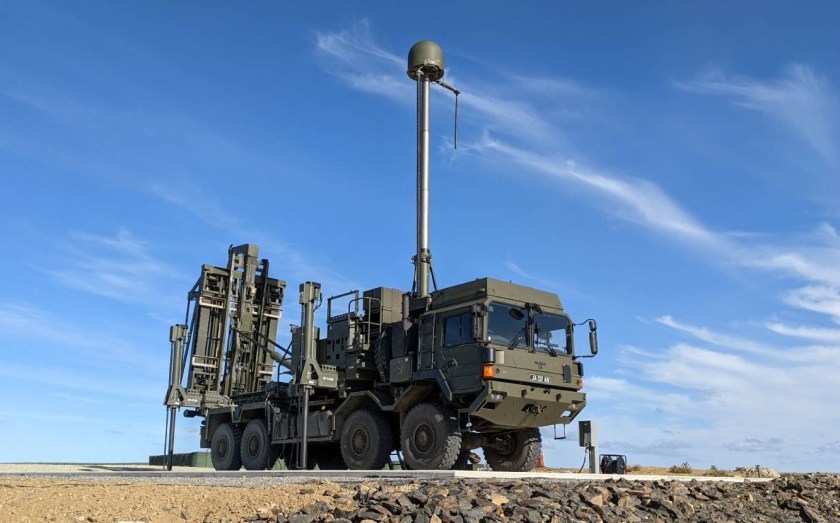
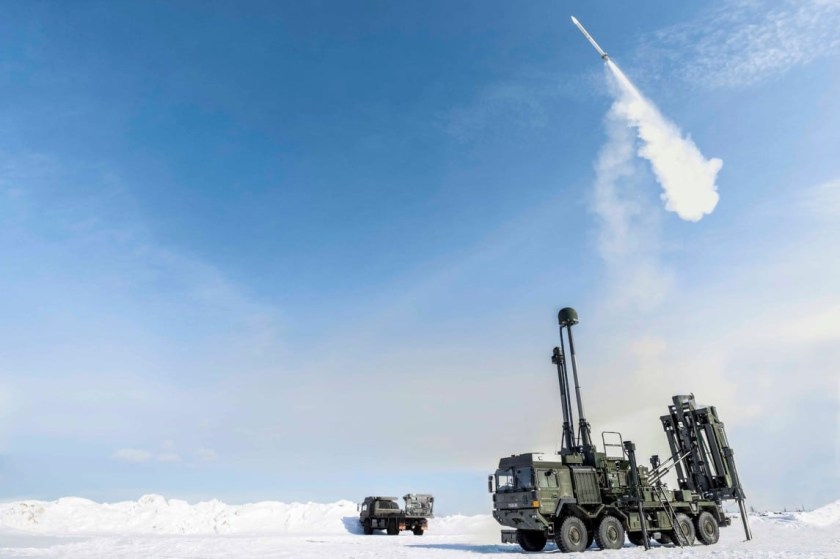
MBDA’s Land Ceptor launcher, firing the Common Anti-Air Modular Missile (CAMM), is the effector at the heart of Sky Sabre. Each system combines launchers with a Saab Giraffe Agile Multi-Beam 3D radar and a command-and-control node, and can engage targets out to 25–30 kilometres. It provides a useful baseline on which to build. The Defence Investment Plan commits more than £350 million to double the number of deployable systems, with new equipment entering service from 2027. Welcome as this is, it takes us from roughly six systems to a dozen.
The UK has around 150 major military bases, of which perhaps 20 are strategically essential. Critical National Infrastructure (CNI) spans energy generation, storage and distribution, nuclear sites, water, food, health, communications, chemicals, space and government. Protecting all of it from direct attack would be extremely challenging, so assume 20 priority CNI sites.
That adds up to 40 sites that need to be defended. If each is covered by a Sky Sabre fire unit with two launchers, the total requirement is 80 launchers. Adding around 24 launchers for deployable Field Army fire units brings the total to around 104 launchers, served by roughly 45 radar and command sets. Such an uplift would provide a meaningful capability.
At sea: Sea Ceptor and Sea Viper
The Royal Navy operates the naval equivalent of Land Ceptor, Sea Ceptor, which also fires CAMM. Commonality between the Navy and the Army simplifies logistics and reduces costs. The Type 45 destroyers additionally carry Sea Viper with Aster missiles. Under the Sea Viper Evolution programme, their Aster 30s are being upgraded to Block 1 standard, giving them a limited capability against anti-ship ballistic missiles.
However, the Navy now has only 11 destroyers and frigates – six Type 45s and five Type 23s. No ship can be in two places at once, and those hulls are needed for the Navy’s own tasks. A destroyer moored in the Thames is not a homeland defence plan.
Airfields: Rapid Sentry
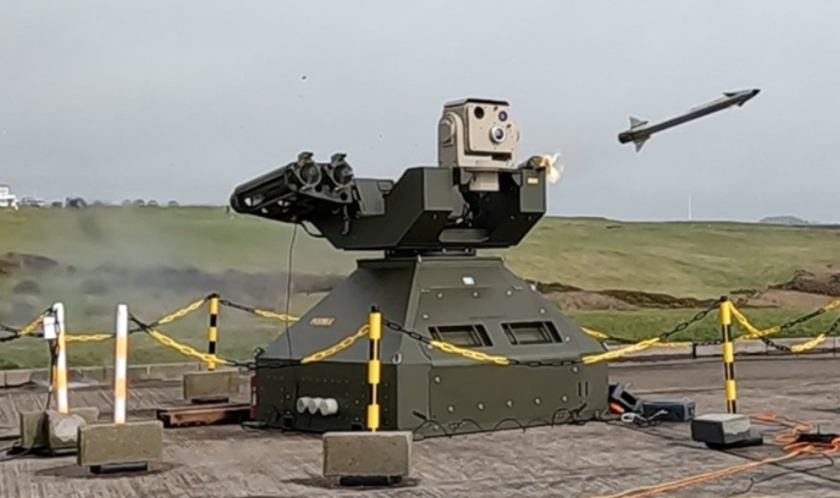
The RAF Regiment handed its ground-based air defence role to the Army in 2008, leaving most RAF stations without integral air defence. More recently, the Regiment has acquired Rapid Sentry, a trailer-mounted launcher firing LMM, as part of its ORCUS counter-drone system. It has been deployed to Cyprus, Iraq and Kuwait in small, undisclosed numbers, and RAF Regiment gunners have used LMM to shoot down more than 100 drones in the Middle East.
Mobile short range: replacing Stormer
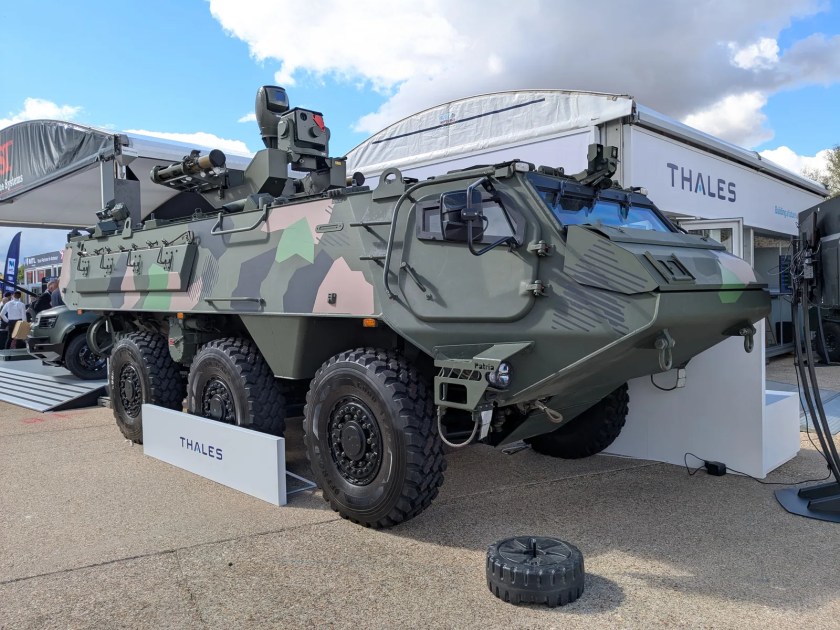
The Army plans to replace Stormer from 2028. Thales is under contract for the Mounted SHORAD assessment phase, and in September 2026 displayed its RapidRanger launcher integrated on the Patria 6×6 that the UK is acquiring through the Common Armoured Vehicle System (CAVS) programme. This would provide an excellent mobile SHORAD platform, but full programme funding has not yet been approved.
Some 140 mobile SHORAD missile vehicles are needed: around 100 for the Army to replace Stormer, plus 40 for the RAF to defeat small aerial targets – two at each of the 20 main operating bases.
Countering cheap drones: guns
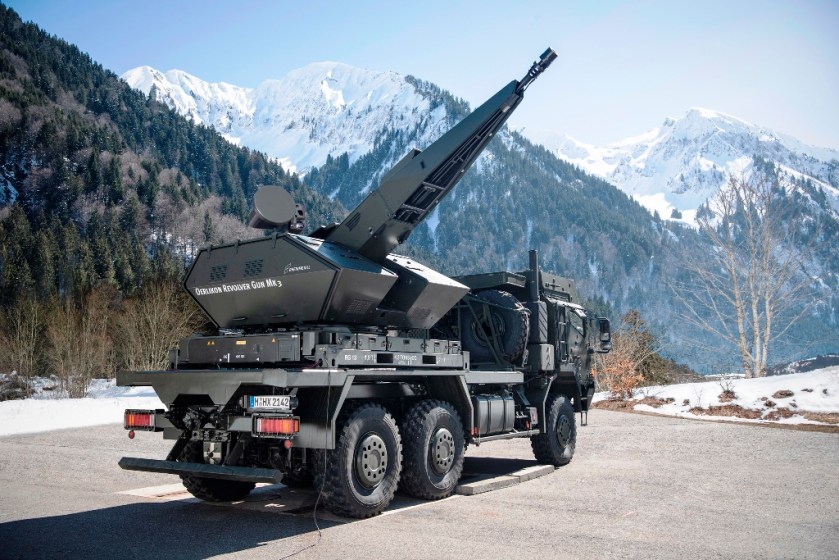
The problem with missiles is cost. LMM is reported to cost around £100,000 a round, and Starstreak £300,000. Firing them at £20,000 drones is unsustainable at scale. Gun-based systems firing programmable airburst ammunition redress the balance.
Rheinmetall’s Skynex, a networked system built around the 35mm Revolver Gun Mk3, is combat-proven in Ukraine. Its vehicle-mounted sibling, Skyranger, offers a mobile option. BAE Systems’ 40mm Bofors gun, which will be fitted to the Royal Navy’s Type 31 frigates, is another. Alternatively, a reconfigurable remote weapon station such as Moog’s RIwP could mount a variety of effectors, including a low-cost 30 mm cannon firing proximity airburst ammunition and 70 mm guided rockets. The tracking and fire-control systems that go with these weapons are just as important.
In addition to 140 SHORAD missile vehicles, 60 gun systems are needed, split equally between the Army and RAF Regiment. Together, 104 Sky Sabre launchers, 140 mobile SHORAD missile vehicles and 60 mobile cannon systems would give us acceptable, but not complete, coverage.
Beyond the launchers
We also need electronic warfare systems able to jam incoming drones, and a digitised kill web that connects sensors to effectors. We must further ensure we have sufficient magazine depth by purchasing missiles in quantity. And we need people. The Army and RAF Regiment already have trained air defence personnel but too few systems for them to operate, so much of the requirement can be met by re-equipping existing units. Around 2,000 additional posts – operators, maintainers, headquarters staff, instructors and logistic support – should suffice.
Does Britain need ballistic missile defence?
The first question is what kind of ballistic missile attack we intend to defeat. A conventional missile aimed at an airfield, a limited nuclear attack intended to coerce the Government, and a large strategic nuclear strike are very different propositions. They cannot be addressed by simply buying more of the same air defence system.
The strongest immediate argument for ballistic missile defence is the protection of vital assets against conventional attack. An adversary does not need a nuclear warhead to disable a headquarters, damage an electricity installation or interrupt operations at an airbase. Russian and Chinese equivalents of the US Precision Strike Missile (PrSM) could cripple the UK as much as a nuclear strike might. Preserving our ability to fight, reinforce allies and sustain essential services provides a substantial justification for a limited BMD capability.
The possibility of nuclear attack cannot be discounted. Although Russia possesses more nuclear warheads than we have available CAMM missiles, the distinction between deployed, stockpiled and retired weapons awaiting dismantlement matters. The size of Russia’s arsenal does not tell us how many weapons might be directed against Britain in a particular scenario. Nor should we assume that economic distress or a threat to Putin’s hold on power would automatically result in a nuclear attack on the United Kingdom. These circumstances could increase escalation risk, but the outcome would depend on political and military decisions we cannot predict.
A limited ballistic missile defence could complicate an adversary’s calculations and provide an opportunity to defeat a small attack. It could not guarantee protection against a large Russian strategic strike involving multiple warheads, decoys and attacks on the defensive network itself. Our nuclear deterrent remains central to preventing such an attack. BMD would complement deterrence, not replace it.
Building a layered architecture
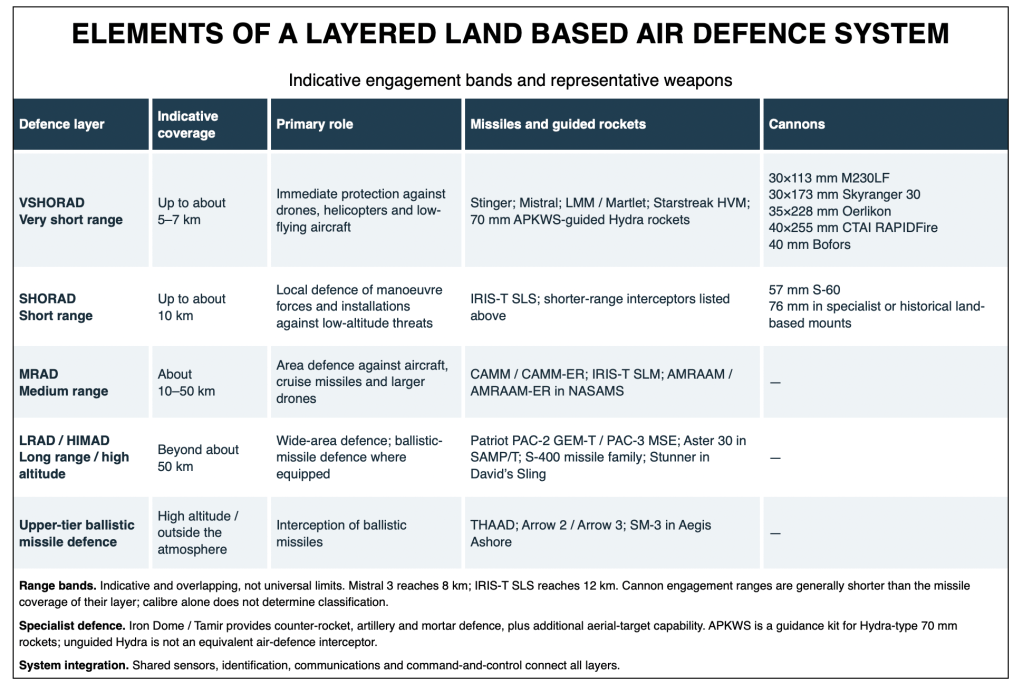
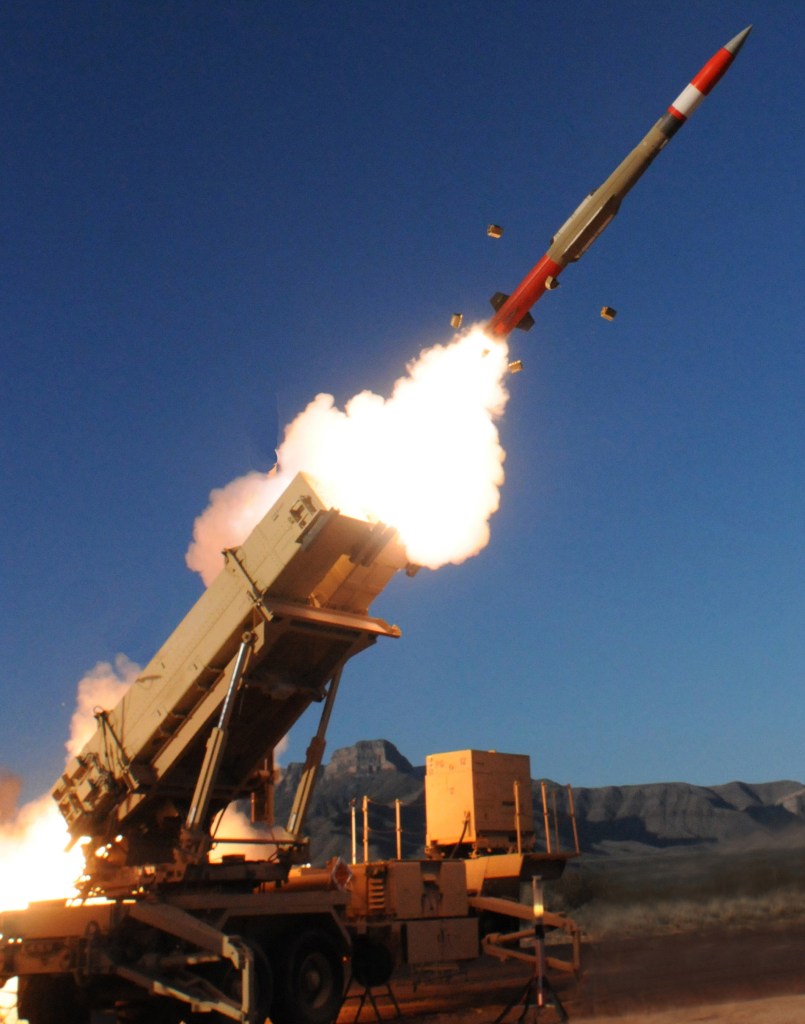
Sky Sabre provides a sound foundation for air defence, but it does not provide the dedicated ballistic missile interception capability discussed here. Patriot equipped with PAC-3 Missile Segment Enhancement (MSE) interceptors does. It can engage tactical ballistic missiles as well as aircraft and cruise missiles, which makes it a potential upper layer above CAMM rather than a replacement for it.
Patriot is not the only option. The Franco-Italian SAMP/T NG, using Aster 30 Block 1NT missiles, also deserves serious consideration. Its relationship with the Royal Navy’s Sea Viper and Aster family offers potential industrial and logistical advantages, although a land-based system would still need its own radars, launchers, command equipment and integration programme. The choice should turn on demonstrated performance against the specified threat, delivery times, missile availability, operating costs, and industrial participation.
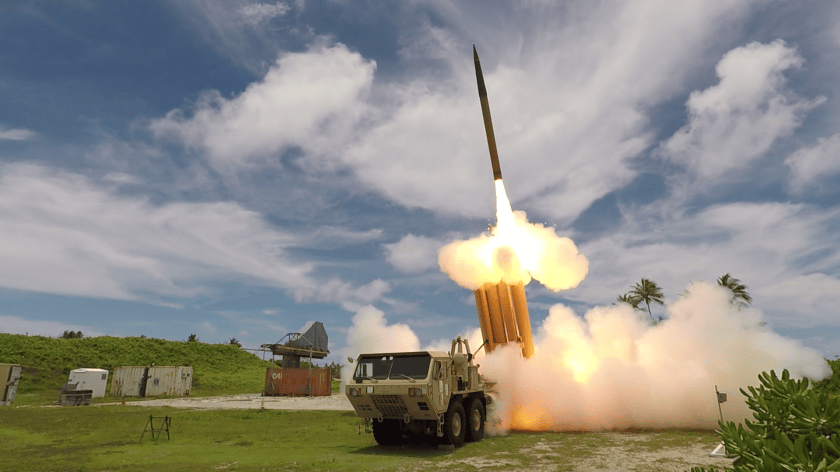
For ballistic threats requiring interception at greater altitude, THAAD could provide a further layer, and other upper-layer options should be evaluated. But acquiring such a system only makes sense once we have established which missiles it could realistically defeat on trajectories towards Britain. It would not remove the need for Sky Sabre, SHORAD or counter-drone systems.
Early warning is equally important. Britain already contributes to allied missile warning through RAF Fylingdales. This would need to be connected to allied space-based warning, additional tracking sensors, and the command systems controlling our interceptors. Skynet can support communications, but communications satellites are no substitute for sensors designed to detect launches. And warning that a missile has been launched is not the same as having a track accurate enough to intercept it.
Britain’s proximity to Russia compresses the time available, but Moscow-to-London distance is an inadequate measure. Launch location, trajectory and missile type matter, particularly for submarine-launched weapons. Short warning demands persistent readiness, rapid data exchange and clearly established rules-of-engagement (ROE) with delegated authority. But it does not make interception inherently impossible.
Saturation is a separate challenge. The network may detect an attack in time and yet lack enough ready missiles to defeat it. Repeated attacks, decoys and simultaneous approaches could exhaust stocks or overwhelm individual fire units. Magazine depth and replenishment are therefore as important as the number of launchers purchased.
Protect national functions before drawing circles around cities
The UK’s major cities are obvious targets. But a national defensive plan cannot consist only of placing a battery beside each. It must also account for essential installations located in in rural areas. If Britannia Shield is also to cover overseas bases and sovereign territories, as the Conservatives propose, the demand on a finite force grows further.
The first priority should be preserving national command and control, our ability to respond militarily, and the infrastructure needed to sustain the country. Airbases, naval facilities, reinforcement ports, electricity supplies, fuel, communications and water services all warrant consideration.
One battery does not necessarily protect an entire metropolitan area. The footprint defended against ballistic missiles differs from the advertised engagement range against aircraft. Coverage depends on approach direction, sensor performance and engagement geometry. Maintenance, training and overseas commitments further reduce the number of units continuously available.
Hardening, dispersal and redundancy must accompany interception. Protected aircraft shelters, decentralised command facilities, distributed ammunition stocks, and rapid repair teams would help preserve operations when weapons penetrate the defensive screen. No credible plan should assume that every incoming threat will be destroyed.
A credible ten-year budget
The proposed lower layers comprise 104 Sky Sabre launchers (MRAD) with around 45 radar and command sets, 140 vehicle-mounted Rapid Ranger-type missile systems(SHORAD), and 60 vehicle-mounted cannon systems (SHORAD). These quantities provide a basis for costing, rather than proof that every priority location could be adequately protected.
There is a useful public benchmark for Land Ceptor. The August 2025 contract allocated £118 million for six launchers, plus ammunition and ancillary vehicles, threat-evaluation systems and spares – roughly £19.7 million per launcher within that package. Applied to 104 launchers, the total acquisition cost would be about £2 billion. It is not the price of complete fire units: additional radars and command nodes are needed. A rounded £3 billion allowance is reasonable for the launchers and their supporting fire-unit equipment, pending a defined configuration.
Using an estimated £12 million per vehicle-mounted system, 140 Rapid Ranger-type SHORAD systems would require £1.7 billion. This is a planning assumption for the proposed mobile configuration, not a manufacturer’s quotation.
Rheinmetall’s Skyranger 30 and 35 mobile SHORAD cannon systems cost between €16 and €20 million each. Each Skynex system comprises four guns, a sensor and tracking unit, and a command station with ammunition, training and spares. The cost is around €70 to €80 million per set, but based on a package of at least six. A regiment of 60 Skyranger 30 cannon-equipped vehicles would cost around €1.1 billion (about £0.95 billion); a £1.1 billion provision allows for UK integration.
The acquisition cost of these three layers is therefore about £5.8 billion. Adding £2.5 billion for initial missiles, training rounds and a replenishment allowance brings the total to about £8.3 billion. That is a plausible starting point for equipment and ammunition, but it is not the cost of operating the force.
An illustrative ten-year budget for the lower layers, in constant 2026 pounds:
| Item | £ billion |
| Sky Sabre launchers, radars and command sets (104) | 3.0 |
| Mobile SHORAD missile vehicles (140) | 1.7 |
| Mobile SHORAD cannon systems (60) | 1.1 |
| Initial missiles, ammunition and replenishment | 2.5 |
| Command and control, sensors and kill-web integration | 2.0 |
| Electronic warfare and soft-kill counter-drone | 1.0 |
| Personnel (about 2,000 posts at £100,000 a year) | 2.0 |
| Sustainment, spares and maintenance | 2.5 |
| Infrastructure and site works | 1.2 |
| Total, lower layers | 17.0 |
The personnel line assumes an average of about 2,000 additional military and civilian posts over the decade, over and above existing Army and RAF Regiment air defence units, which would be re-equipped rather than raised from scratch. It is costed at a rounded, fully burdened £100,000 per post per year. It covers operators, maintainers, headquarters, instructors and logistic support, and must be tested against the organisation and delivery schedule. The ammunition, sustainment, integration and infrastructure lines are planning provisions, not published package prices.
A selective BMD layer would add substantially to this. An initial force of eight complete Patriot/ PAC-3 MSE-class or SAMP/T NG-class fire units would be a reasonable option to examine. It would protect selected assets and offer opportunities for reinforcement, rather than comprehensive national coverage.
(Image: Lockheed Martin)
Allowing about £5 billion for fire-unit equipment, £4.5 billion for around 800 interceptors and associated stockpile support, £3.5 billion for personnel, infrastructure and sustainment, and £2 billion for integration and contingency gives a further £15 billion. These are provisional allowances; the final figure depends heavily on system selection and missile prices. For scale, Raytheon’s 2024 contract for four Patriot fire units for Germany implies roughly $300 million per fire unit before missiles, and the US notification for Germany’s prospective purchase of up to 600 PAC-3 MSE missiles estimated $5 billion. Neither is a transferable British unit price.
The combined programme would therefore require about £32 billion over ten years, with a broad planning range of £25–40 billion. A further upper ballistic layer could add roughly £8–12 billion, subject to separate assessment. These figures exclude unlimited wartime replenishment, a sovereign missile-warning satellite constellation and major national infrastructure reconstruction.
The estimate is the gross cost of the proposed force. Existing funded equipment and programmes (including the Sky Sabre doubling and the Stormer replacement) should be credited where they meet the requirement, rather than paid for twice.
Conclusion
Britannia Shield is a worthwhile ambition. The immediate need for stronger British air defence is difficult to dispute. The challenge is turning that ambition into a defined capability that’s affordable and sustainable.
£10 billion could fund a substantial first phase – more than twelve times what the Government has allocated to homeland air and missile defence. It would not cover the acquisition and ten-year operation of all the capabilities considered here. Equally, a selective programme costing about £32 billion should not be confused with the much broader national architecture envisaged by Sir Richard Barrons.
Government and Opposition should explain what their proposals would protect, against which threats, at what readiness, and with enough ammunition for how many successive attacks. Britain needs credible protection, properly staffed and sustained. It also needs a transparent statement about the protection that remains beyond its reach.

